Modern inertial navigation relies on two cutting-edge rotation sensors: Ring Laser Gyroscopes (RLGs) and Fiber Optic Gyroscopes (FOGs).
Both utilize the Sagnac Effect, but their designs and performance characteristics differ significantly.

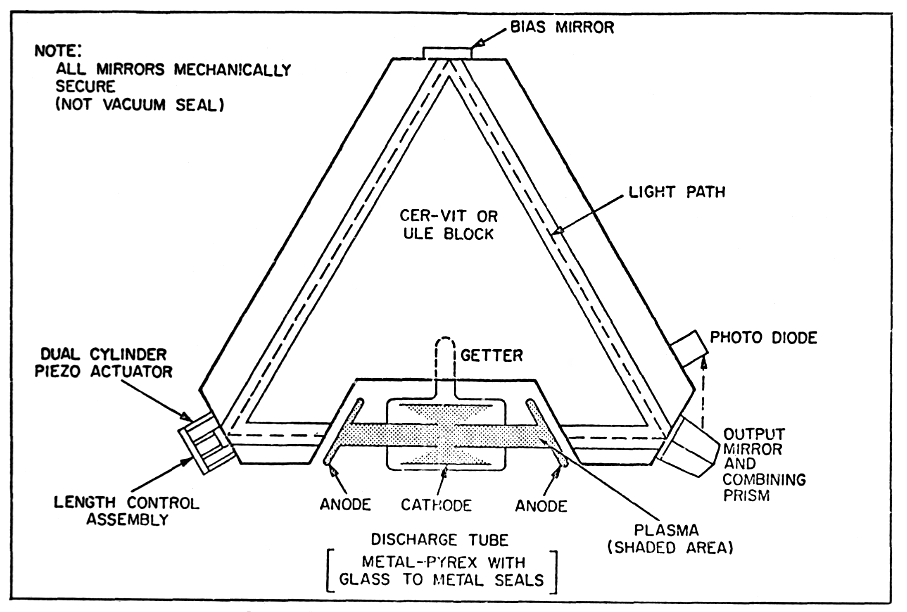
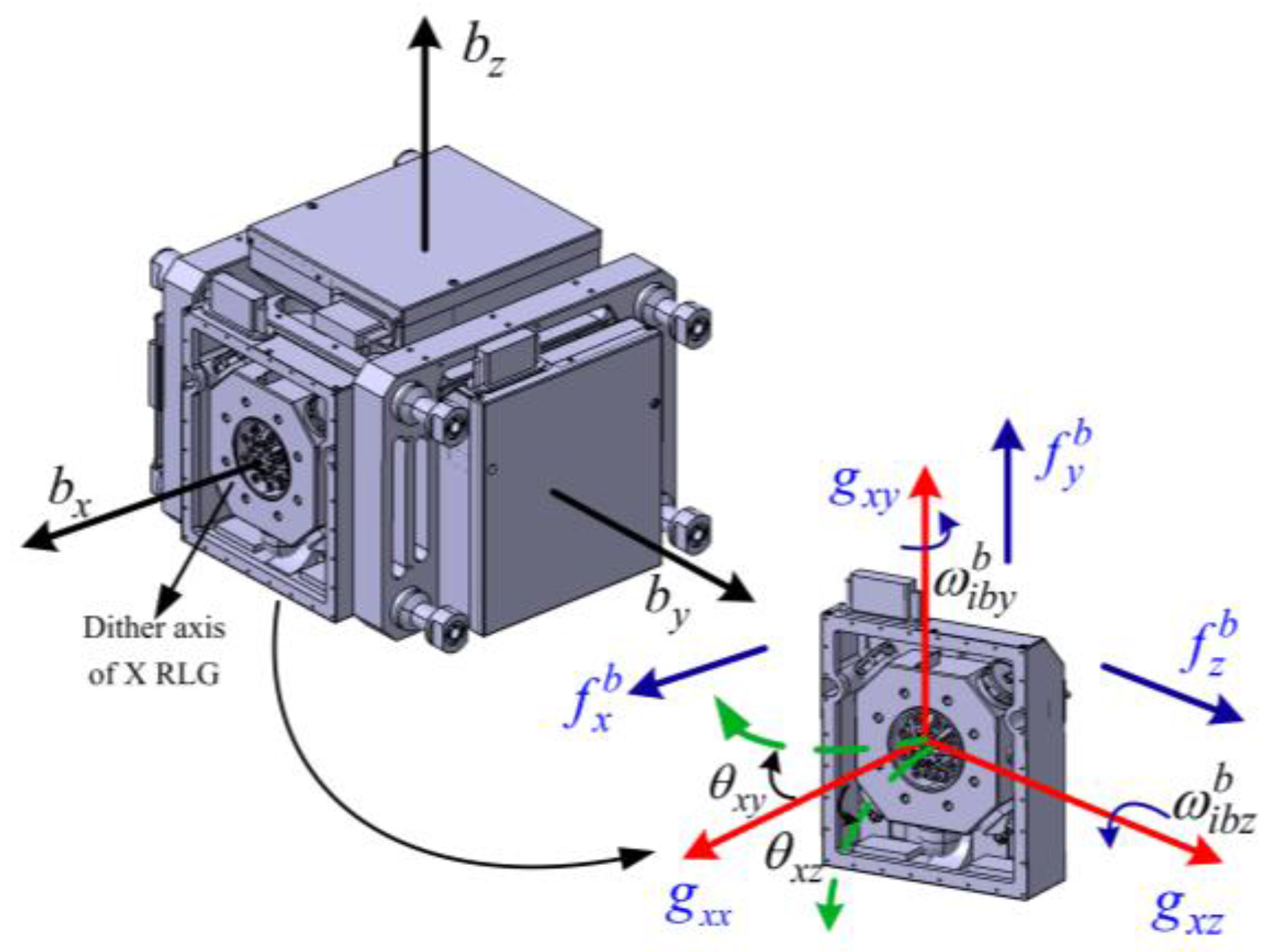
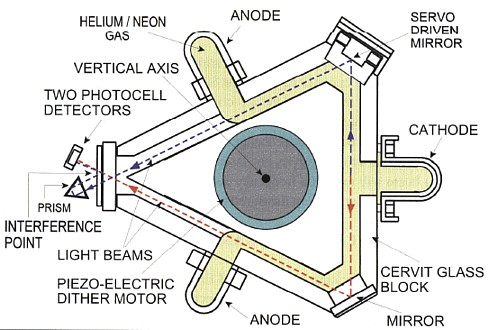
🔴 Ring Laser Gyroscope (RLG) A He-Ne ring-cavity laser generates two counter-propagating beams. Rotation induces a frequency difference — the Sagnac effect in action.
Key Advantages: ✔ Ultra-high accuracy ✔ Wide dynamic range ✔ Excellent long-term stability ✔ Strong resistance to vibration and temperature changes ✔ Standard in aerospace and defense high-performance inertial systems
Typical Performance: 🇨🇳 Domestic: Scale factor stability >5 ppm, bias stability 0.01–0.001°/h 🌍 International: Scale factor stability <1 ppm, bias stability up to 0.0001°/h or better
🔵 Fiber Optic Gyroscope (FOG) Light travels through a long optical fiber coil. Rotation causes a phase shift or frequency shift (depending on type). Compared to RLG, FOG has no moving parts, is lighter, and lower cost, but more sensitive to temperature and vibration.
Main Types: • RFOG (Resonator FOG): Measures frequency difference, uses resonator to enhance Sagnac effect • IFOG (Interferometric FOG): Measures phase difference — most mature and widely used • BFOG (Brillouin FOG): Phase difference based on Brillouin scattering
Open-Loop vs Closed-Loop FOG Open-Loop: Simple design, low cost Limited dynamic range and linearity, lower accuracy
Closed-Loop: More complex with feedback mechanism Large dynamic range, excellent linearity, high accuracy — ideal for demanding applications
RLG and FOG are core technologies in optical gyroscopes. Choice depends on application: RLG for ultimate precision and stability, FOG for advantages in cost, size, and reliability. With advancements, they increasingly complement each other in high-precision inertial navigation.


Add comment